The Industry Didn’t Change — But Your Knowledge Can
If you haven’t listened to Part 1 of Ella Cressman’s deep dive into the skincare industry, start there. This follow-up goes further — and in many ways, darker.
Ella Cressman is a certified international skincare educator and licensed esthetician who has spent years studying not just how skincare formulations work, but how the industry sells them. What she’s uncovered is a pattern of practices designed to profit from consumer confusion rather than genuinely help people achieve healthy skin.
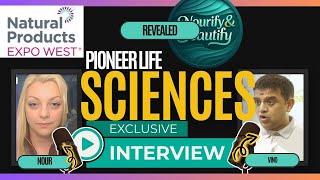
In this second conversation with Nour Abochama, Ella exposes the more nuanced deceptions: the marketing language that’s technically legal but functionally misleading, the ingredient list tricks that hide what’s really in your products, and the uncomfortable reality of how many “clean beauty” brands operate.
The “Technically True” Problem
One of the most insidious forms of marketing deception is the claim that is technically accurate but practically meaningless.
“Dermatologist-tested” — this doesn’t mean a dermatologist approved the product. It means a dermatologist tested it. The test results could show it’s harmful and the claim would still be legally valid.
“Hypoallergenic” — the FDA has no regulatory definition for this term. Any brand can use it on any product regardless of its actual allergenic potential.
“Natural” — again, no regulated definition. A product containing 0.1% plant extract alongside synthetic preservatives and surfactants can be legally marketed as “natural.”
“Fragrance-free” — this actually means no added fragrance compounds. But a product can still contain fragrant raw materials (like certain plant extracts or essential oils) and be labeled fragrance-free, because the fragrance is a byproduct of the ingredient, not an intentional addition.
“The labeling system was designed in an era when brands were expected to self-regulate,” Ella explains. “Most did the right thing. But as the industry scaled, the gap between what claims imply and what they mean legally became a commercial opportunity.”
Ingredient Concentration Games
The European Union requires cosmetic ingredients to be listed in descending order of concentration — highest concentration first, down to 1%, below which ingredients can be listed in any order.
The US follows the same rule. And savvy brands exploit the “below 1%” loophole aggressively.
How it works in practice:
A moisturizer lists hyaluronic acid prominently in its marketing. On the ingredient list, hyaluronic acid appears near the bottom — after preservatives, after fragrance, after thickeners. This placement suggests it’s present at below 1% concentration.
At sub-1% concentrations, hyaluronic acid provides minimal benefit. The actual moisturizing comes from glycerin and emollients listed much earlier. But the consumer bought it for the hyaluronic acid.
“When I see a ‘vitamin C serum’ where ascorbic acid is listed after the preservatives, I know the vitamin C isn’t doing much,” Ella says. “The bottle is selling you a story the ingredient list doesn’t support.”
What to look for:
- The first five ingredients make up the bulk of the formula
- Look for key actives in the first five to ten ingredients
- If a hero ingredient appears after preservatives, it’s present at trace levels
- Beware of ingredient lists with 40+ entries — complexity often masks low concentrations of everything
The Safety Testing Gap
Here is the regulatory reality that most consumers don’t know:
In the United States, cosmetic products do not require pre-market safety approval.
A brand can formulate a product, manufacture it, and put it on shelves without any regulatory review. The FDA can take action after a product is on the market if it receives adverse event reports — but the brand doesn’t have to prove safety before selling.
This changed slightly with MoCRA (Modernization of Cosmetics Regulation Act) in 2022, which now requires:
- Facility registration with the FDA
- Product listing
- Serious adverse event reporting within 15 days
- Safety substantiation records
But “safety substantiation” doesn’t prescribe specific tests. A brand needs “a reasonable basis to believe” their product is safe. What constitutes “reasonable basis” is left largely to the brand’s interpretation.
“The gap between what regulation requires and what consumers assume is happening is enormous,” Ella tells Nour. “Consumers assume every product has been tested and approved. The reality is much more hands-off.”
At Qalitex Laboratories, we see the real-world consequence of this gap regularly. Cosmetic brands come to us for microbiology testing, preservative efficacy testing, and heavy metal screening — often because they’ve launched a product and then decided to verify its safety retroactively. Some have launched products that fail basic safety benchmarks because they assumed the contract manufacturer handled testing. The manufacturer assumed the brand handled it. Neither verified.
The “Clean Beauty” Paradox
The clean beauty movement was born from legitimate consumer concern about potentially harmful ingredients. But the movement has been largely captured by marketing departments.
The problem: “Clean” has no regulatory definition. Any brand can use it. And many brands use it to charge premium prices for products that are not meaningfully different from — or safer than — conventional alternatives.
Some patterns Ella has identified in problematic “clean beauty” marketing:
Fear-based ingredient blacklists. Many “clean” brands market themselves by listing ingredients they don’t use — parabens, sulfates, phthalates, synthetic fragrances. Some of these ingredients have legitimate safety concerns at certain concentrations. Others have been vilified by marketing rather than evidence. Parabens, for instance, are among the most studied cosmetic preservatives and are considered safe at the concentrations used in cosmetics by regulatory bodies globally.
Replacing studied ingredients with unstudied ones. In avoiding parabens, some brands use alternative preservatives with much less safety data. “Replacing a well-studied ingredient with a novel one isn’t automatically safer,” Ella notes. “It’s just less studied.”
Greenwashing through packaging. Bamboo applicators, recycled plastic, brown kraft paper labels — these communicate naturalness and sustainability regardless of what’s inside.
What Actually Indicates Quality
After spending years in the industry, Ella’s criteria for trustworthy brands have become more specific than “clean” or “natural”:
1. Transparent formulation rationale. Can the brand explain why each ingredient is in the formula and at what concentration? Brands that understand their own formulations can answer these questions.
2. Third-party testing with published results. Some brands publish Certificates of Analysis or testing summaries. This is a meaningful signal — it means they tested and were willing to stand behind the results.
3. Stable, effective preservative system. A product’s preservative efficacy is tested through a Challenge Test (also called a Preservative Efficacy Test or PET), which deliberately introduces microbes and measures whether the preservative system controls them. Ask if the brand has done this.
4. GMP manufacturing. Good Manufacturing Practice certification (through NSF, ISO 22716, or similar) means the manufacturing facility has been audited for hygiene, contamination control, and quality systems.
5. Responsive customer service on ingredient questions. “A brand that can’t answer basic questions about their formulation is a brand that doesn’t know their formulation,” Ella says. “That’s a red flag.”
The Testing Reality: What Responsible Brands Do
For context on what proper cosmetic testing actually looks like, here is what a responsible cosmetic brand conducts before market launch:
- Microbiology testing — confirming absence of pathogens (Staph aureus, Pseudomonas aeruginosa, E. coli, Salmonella, Candida albicans)
- Preservative Efficacy Testing (PET/Challenge Test) — confirming the preservative system maintains product safety over time
- Heavy metal screening — lead, arsenic, cadmium, mercury
- Stability testing — accelerated aging to confirm product integrity over its intended shelf life
- pH testing — ensuring formulation stability and skin compatibility
- Viscosity and appearance testing — batch-to-batch consistency
Most consumers have no way of knowing whether a brand has done these tests. Asking for a Certificate of Analysis — or for documentation of third-party testing — is the clearest signal of where a brand stands.
Key Takeaways
- “Dermatologist-tested,” “hypoallergenic,” and “natural” have no regulated definitions — any brand can use them
- Ingredients below 1% concentration can be listed in any order, enabling brands to place hero ingredients at trace levels while prominently featuring them in marketing
- US cosmetics require no pre-market safety approval; MoCRA (2022) added registration and adverse event reporting requirements but doesn’t prescribe specific safety tests
- “Clean beauty” has no regulatory definition and is frequently used as a marketing term rather than a safety standard
- Ask for Certificates of Analysis; brands that test their products should be able to provide them
- Look for third-party certifications (NSF GMP, ISO 22716) and brands that can explain their formulation rationale
This article is based on Episode 15 of Nourify & Beautify with Ella Cressman. Watch the full conversation on YouTube or listen on Podbean.