The Korean 10-Step Routine Is Not the Point
When K-Beauty went mainstream in the West, the story became: Koreans do 10 steps and have perfect skin. Buy these 10 products and you will too.
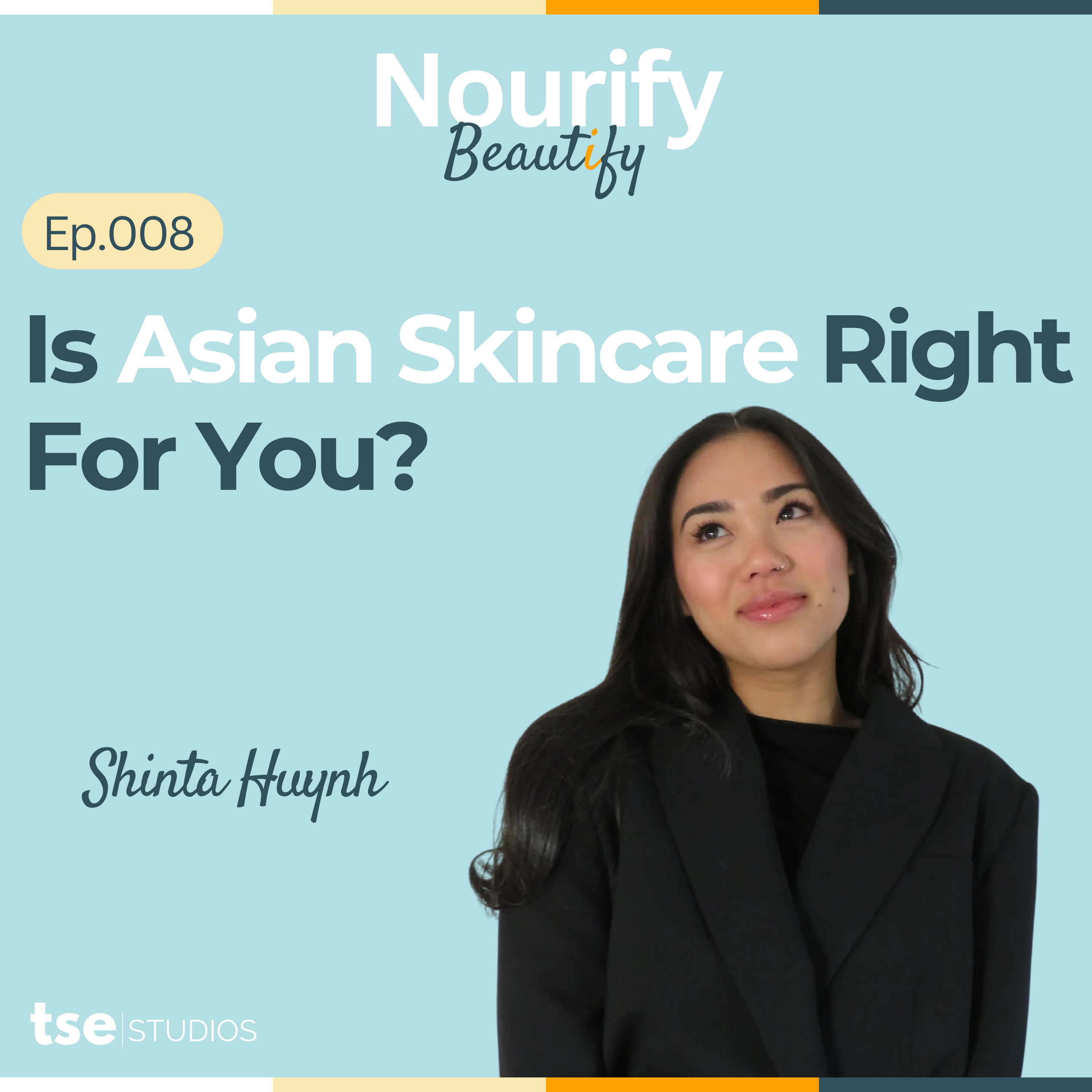
Shinta Huynh, a skincare product developer who has worked with both Korean and Japanese formulation houses, has a different take.
“The 10-step routine was a content marketing phenomenon, not a clinical recommendation,” she explains to Nour Abochama. “Korean women don’t uniformly do 10 steps. What Korean skincare culture is actually about is skin as a long-term investment — and a formulation philosophy that prioritizes hydration and barrier preservation over aggressive correction.”
That’s a much more useful insight than a product count.
What K-Beauty Is Actually About (Formulation Philosophy)
Korean skincare innovation has been driven by a few core principles that distinguish it from Western approaches:
Layering for hydration. The classic K-Beauty sequence — toner, essence, serum, ampoule, moisturizer — is about layering increasingly concentrated water-soluble hydration. Each layer is designed to be absorbed before the next is applied, building hydration in the dermis and epidermis progressively. This is different from the Western approach of one moisturizer applied directly to cleansed skin.
Barrier preservation as primary goal. Korean formulation prioritizes maintaining the skin’s natural moisture barrier (the lipid bilayer of the stratum corneum). This means gentler cleansers (no sulfate-heavy formulas), lower pH toners (matching the skin’s natural slightly acidic pH rather than disrupting it), and moisturizers with ceramides and fatty acids that mimic the skin’s own barrier lipids.
Prevention over correction. Korean anti-aging strategy emphasizes starting sun protection and hydration early rather than corrective interventions later. “Glass skin” — the dewy, translucent look that became the aesthetic benchmark — is primarily achieved through consistent hydration and sun protection over years, not through aggressive acids or retinoids.
Sheet masks as treatment delivery. Sheet masks create an occlusive environment that drives active ingredients deeper into the skin than leave-on products applied in thin layers. The concept was pioneered in Korea and is now global — but the Korean approach to sheet mask ingredients (snail mucin, galactomyces ferment, niacinamide) influenced global formulation.
What J-Beauty Offers (And How It Differs from K-Beauty)
Japanese skincare is less understood in the West than Korean, partly because it’s less aggressively marketed.
J-Beauty philosophy shares the emphasis on simplicity and consistency but has distinct formulation traditions:
Fermentation technology. Sake fermentation (Pitera from SK-II is the most famous example) produces galactomyces ferment filtrate, which is rich in vitamins, amino acids, and organic acids. Fermented rice water, fermented soybean extracts, and other fermented ingredients are mainstays of Japanese skincare.
Wabi-sabi aesthetics applied to skin. Japanese skincare doesn’t pursue glass-skin translucency — it pursues “mochi skin” (soft, plump, bouncy) and accepts minor imperfections as natural. The product formulations reflect this: gentler actives, emphasis on texture and sensoriality, longer time horizons.
Multi-step but minimal steps. Classic J-Beauty routine is typically three to four products: gentle cleanser, lotion (the Japanese “lotion” is a thin hydrating toner, not a Western lotion), serum or emulsion, sunscreen. The emphasis is on quality of each step rather than quantity of products.
Sun protection as core. Japan has some of the world’s highest SPF innovation — Japanese sunscreens are frequently cited as the global gold standard for elegance of formulation (no white cast, comfortable texture, high protection). UV protection is central to J-Beauty in a way that wasn’t always true in Western markets.
Does Asian Skincare Work for All Skin Types?
The products do — but the routine architecture may need adaptation.
For dry skin: K-Beauty and J-Beauty philosophy maps well. Both prioritize hydration and barrier support. The layering approach and ceramide-rich moisturizers are ideal for dry skin types.
For oily or acne-prone skin: The hydration-first approach is counter-intuitive but often effective. Dehydrated oily skin produces more oil as compensation. Proper hydration (water-based, not occlusive oils) can actually reduce oiliness over time. However, some K-Beauty essences and ampoules are quite occlusive — these should be evaluated individually.
For sensitive skin: J-Beauty formulations tend to be gentler than both Korean and Western approaches. Lower fragrance, simpler formulas, more emphasis on fermented ingredients which have been transformed to lower irritancy. Generally a good fit.
For darker skin tones: Both K-Beauty and J-Beauty have historically formulated for East Asian skin tones and have a significant emphasis on brightening and pigmentation reduction. Products heavily formulated for brightening may not be appropriate for darker skin tones; some brightening agents (hydroquinone, arbutin) can cause irregular depigmentation in higher skin phototypes. Individual ingredient evaluation is important.
Ingredients That Crossed From Asia to Global Skincare
Several ingredients that originated in or were popularized by Asian skincare are now global:
Niacinamide. Present in Japanese skincare for decades before its Western popularity explosion. Stabilizes the skin barrier, reduces transepidermal water loss, mild brightening effect through inhibition of melanin transfer (not melanin production — a crucial distinction). Extremely well-tolerated. One of the few skincare ingredients with a robust clinical evidence base at concentrations used in products (2–5%).
Ceramides. Lipid molecules that make up approximately 50% of the skin’s barrier lipid matrix. Depleted by aging, harsh cleansing, and certain medical conditions. Replacement through ceramide-containing moisturizers has clinical support for improving barrier function and reducing transepidermal water loss. Common in both J-Beauty and now global formulations.
Snail mucin. Sounds alarming, functions well. Snail secretion filtrate contains hyaluronic acid, glycoprotein enzymes, proteoglycans, and antimicrobial peptides. Clinical evidence for wound healing and skin regeneration is emerging. Well-tolerated in most skin types.
Galactomyces ferment filtrate. The fermentation byproduct of yeast, rich in vitamins, minerals, and amino acids. Stabilizes the skin barrier, improves skin texture, mild brightening. SK-II built a billion-dollar brand on this ingredient.
Bakuchiol. Plant-derived retinol alternative (from bakuchi seeds) that activates similar gene pathways to retinol with lower irritancy. Originated in Ayurvedic medicine, popularized through K-Beauty formulation. Has growing clinical evidence as a gentler retinol substitute.
How to Approach Asian Skincare Without Starting Over
Shinta’s recommendation for people curious about incorporating Asian skincare principles without replacing their entire routine:
Start with a hydrating toner/essence. Adding a watery hydrating step after cleansing (before your current serum and moisturizer) introduces the layering philosophy without requiring a complete overhaul. Look for hyaluronic acid, galactomyces ferment, or rice water in the first five ingredients.
Upgrade your sunscreen. If you’re not using a Japanese-formula SPF product, trying one is the single change most likely to produce a noticeable difference. Japanese sunscreens (Biore, Kanebo, Sofina) are available internationally and represent a different category of aesthetic elegance compared to most Western SPF products.
Introduce sheet masks strategically. Two to three times per week, before moisturizer, using a mask with niacinamide, galactomyces, or centella asiatica provides treatment-level ingredient delivery.
Be patient. Both K-Beauty and J-Beauty are long-game philosophies. The results from consistent hydration and barrier support accumulate over months, not days.
Key Takeaways
- K-Beauty philosophy prioritizes barrier preservation and progressive hydration through layering, not the 10-step routine per se
- J-Beauty emphasizes fermentation-derived ingredients, minimal product count, and extremely high-quality sunscreen formulation
- Niacinamide, ceramides, and galactomyces ferment are evidence-backed ingredients from Asian skincare with strong clinical support
- Brightening-focused products from Asian skincare may not be appropriate for all skin tones; individual ingredient evaluation matters
- Start with a hydrating toner/essence and an upgraded sunscreen — the highest-impact additions from Asian skincare philosophy
This article is based on Episode 8 of Nourify & Beautify with Shinta Huynh. Watch the full conversation on YouTube or listen on Podbean.